
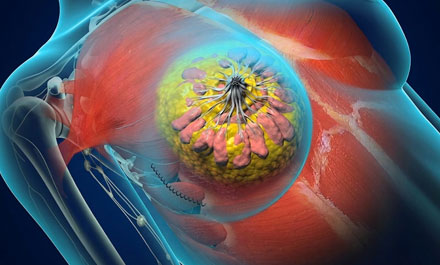
Breast cancer is one of the most common cancers affecting women. It develops when abnormal cells in the breast grow uncontrollably and form a tumour. With advances in cancer diagnosis, surgical oncology, breast-conserving techniques, and multidisciplinary cancer care, patients today have access to a wide range of effective treatment options.
Surgery remains an important part of treatment for many patients with breast cancer. The type of surgery recommended depends on several factors, including the size and location of the tumour, stage of cancer, lymph node involvement, overall health, and the patient's individual treatment goals.
Dr. Ramkishan Nag, an experienced Surgical Oncologist, provides personalized surgical care for breast cancer patients using modern cancer surgery techniques and treatment approaches tailored to each patient's condition.
Breast cancer develops when cells within the breast begin to grow abnormally and uncontrollably. These abnormal cells may form a lump or tumour and, in some cases, can spread to nearby lymph nodes or other parts of the body.
Breast cancer can occur in different parts of the breast and may have different biological characteristics. Accurate diagnosis and staging are essential for deciding the most appropriate treatment approach.
Breast cancer may not always cause symptoms during its early stages. Common warning signs that should be evaluated by a medical professional include:
Any new or persistent breast change should be evaluated promptly to determine its cause.
Accurate diagnosis is essential before planning breast cancer treatment. Depending on the patient's symptoms and clinical findings, investigations may include:
These investigations help determine the type and stage of breast cancer and assist the cancer care team in developing an individualized treatment plan.
Surgery may be recommended when the breast cancer can be treated surgically. The decision depends on the stage and characteristics of the cancer, tumour size, location, lymph node involvement, response to other treatments, and the patient's overall health.
In some patients, surgery may be the first treatment. In others, chemotherapy or other systemic treatment may be recommended before surgery to reduce the tumour size or control the disease.
The appropriate surgical procedure depends on the patient's diagnosis and individual treatment plan. Common surgical approaches include:
The goal is to achieve effective cancer control while preserving the breast and surrounding structures whenever medically appropriate.
Breast-conserving surgery involves removing the cancerous tumour along with a surrounding margin of healthy tissue while preserving most of the breast. It may be suitable for selected patients depending on the tumour size, location, breast size, cancer stage, and other clinical factors.
Breast-conserving surgery is often followed by radiation therapy as part of the overall treatment plan. The suitability of this approach is carefully assessed for every patient.
Mastectomy involves removal of the breast tissue and may be recommended when breast-conserving surgery is not suitable or when a patient requires or chooses removal of the entire breast based on the clinical situation.
Depending on the type and extent of cancer, lymph node surgery may also be performed. Reconstruction may be considered in selected patients as part of their overall treatment and recovery plan.
Breast cancer can sometimes spread to lymph nodes in the armpit. Evaluation of these lymph nodes helps determine the extent of the disease and guides further treatment.
The extent of lymph node surgery is determined according to the patient's cancer stage, clinical findings, imaging, and treatment plan.
Oncoplastic breast surgery combines principles of cancer surgery with reconstructive and cosmetic surgical techniques. The aim is to remove the cancer adequately while maintaining the shape and appearance of the breast as much as possible.
This approach may be considered for selected patients undergoing breast-conserving surgery or other breast cancer procedures.
Breast cancer treatment often involves more than surgery alone. A multidisciplinary cancer team may include a Surgical Oncologist, Medical Oncologist, Radiation Oncologist, Radiologist, Pathologist, and other specialists.
Depending on the type and stage of breast cancer, chemotherapy, hormonal therapy, targeted therapy, radiation therapy, or other treatments may be recommended before or after surgery.
Coordinated treatment planning helps ensure that each patient receives an approach appropriate for their cancer characteristics and overall health.
Recovery depends on the type and extent of surgery performed and the patient's overall health. Patients may require wound care, pain management, nutritional support, physiotherapy, and gradual return to normal activities.
Regular follow-up is important after breast cancer surgery to monitor recovery, review pathology results, plan additional treatment when required, and monitor for any signs of recurrence.
Dr. Ramkishan Nag provides personalized surgical oncology care for patients with breast cancer. His approach focuses on appropriate cancer removal, careful surgical planning, modern surgical techniques, and coordinated multidisciplinary cancer treatment.
Each patient's treatment plan is developed according to the type, stage, location, and characteristics of the cancer, with an emphasis on effective treatment and quality of life.
Breast cancer is highly treatable in many patients, particularly when detected and managed at an appropriate stage. Surgery can play a crucial role in removing the cancer and controlling the disease. Depending on the individual case, breast-conserving surgery, mastectomy, lymph node surgery, or oncoplastic techniques may be considered.
If you or a loved one has been diagnosed with breast cancer, timely consultation with an experienced Surgical Oncologist can help you understand the available surgical options and develop an appropriate treatment plan.
Surgery may be recommended when the breast cancer can be safely removed. The decision depends on factors such as the cancer type, stage, tumour size and location, lymph node involvement, response to other treatments, and the patient's overall health.
Common procedures include breast-conserving surgery such as lumpectomy or wide local excision, mastectomy, sentinel lymph node biopsy, axillary lymph node surgery when required, and oncoplastic breast surgery for selected patients.
Yes. Selected patients may be suitable for breast-conserving surgery, where the tumour and a surrounding margin of tissue are removed while preserving most of the breast. Suitability depends on the individual cancer characteristics.
Lymph node evaluation may be recommended to determine whether the cancer has spread to nearby lymph nodes. Depending on the clinical situation, sentinel lymph node biopsy or axillary lymph node dissection may be performed.
Dr. Ramkishan Nag provides personalized surgical oncology care for breast cancer, with treatment planning based on the cancer type, stage, tumour characteristics, and overall health of the patient. His approach focuses on appropriate cancer removal, modern surgical techniques, patient safety, and coordinated multidisciplinary care.