
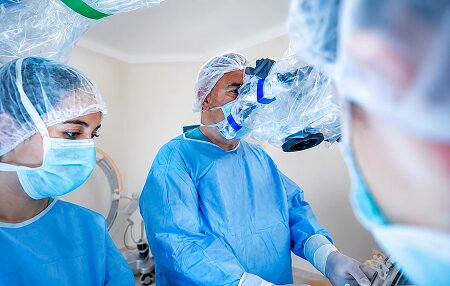
Patients searching for the Best Robotic Cancer Surgeon in Colaba often want to understand whether robotic-assisted surgery can be a suitable option for their cancer condition. Dr. Ramkishan Nag is a Surgical Oncologist with MBBS, MS, and MCh (Surgical Oncology) qualifications and advanced training from Tata Memorial Hospital. He provides detailed evaluation to determine whether robotic-assisted surgery may be appropriate as part of an individualized cancer treatment plan.
Robotic cancer surgery is an advanced minimally invasive surgical technique that allows surgeons to perform complex procedures with enhanced visualization, improved precision, and better instrument control. The robotic system does not replace the surgeon but assists the surgeon in performing carefully planned procedures with greater surgical accuracy.
Dr. Ramkishan Nag follows a patient-focused approach where robotic surgery recommendations are based on cancer type, tumour location, disease stage, and overall health condition. Each case is evaluated carefully to determine the most appropriate surgical strategy for achieving effective cancer management.
Robotic-assisted cancer surgery uses advanced robotic technology that allows surgeons to control specialized instruments through a console. The system provides magnified three-dimensional visualization and enhanced instrument movement, helping surgeons perform delicate procedures with improved control.
Unlike traditional open surgery, robotic procedures are performed through small surgical openings in selected cases. However, robotic surgery is not suitable for every patient, and the decision depends on detailed evaluation of the cancer condition and treatment goals.
During robotic-assisted cancer surgery, the surgeon controls robotic instruments from a specialized console while viewing the surgical area through high-definition three-dimensional imaging. The robotic system allows precise movements and improved flexibility during complex procedures.
Before recommending robotic surgery, Dr. Ramkishan Nag evaluates diagnostic reports, imaging findings, tumour characteristics, and individual patient factors. This helps determine whether a robotic approach can provide meaningful benefits for the specific cancer condition.
Robotic-assisted surgery has become an important advancement in surgical oncology for appropriately selected patients. The technology supports surgeons by providing enhanced visualization and precise instrument movement while maintaining complete surgeon control throughout the procedure.
Compared with conventional surgical approaches, robotic procedures may offer advantages in selected cases, including improved surgical precision, smaller incisions, and potentially faster recovery. However, treatment decisions are always based on the patient's cancer condition and overall health.
When clinically appropriate, robotic-assisted cancer surgery may provide several benefits while supporting the primary goal of safe and effective cancer treatment.
Robotic technology has expanded the possibilities of minimally invasive cancer surgery by helping surgeons perform complex procedures with improved visualization and instrument control. It is considered an important surgical advancement when used for appropriately selected cases.
The decision to use robotic-assisted surgery depends on several factors, including tumour location, cancer stage, previous treatments, and the expected surgical outcome. A detailed consultation helps determine whether robotic surgery is a suitable option.
Robotic-assisted cancer surgery is not suitable for every patient or every type of cancer. The suitability of a robotic approach depends on various factors including tumour location, cancer stage, previous treatments, overall health condition, and whether minimally invasive surgery can achieve the desired treatment objectives.
During consultation, Dr. Ramkishan Nag carefully reviews the patient's diagnosis, medical reports, and imaging findings before discussing available surgical options. If robotic-assisted surgery may provide meaningful benefits, the procedure and expected outcomes are explained in detail.
Robotic-assisted techniques may be considered for selected cancer procedures depending on the tumour location, complexity of surgery, and individual patient requirements. The final treatment decision is based on detailed evaluation by an experienced Surgical Oncologist.
Robotic surgery is not only about advanced technology; it requires appropriate patient selection, detailed planning, and surgical expertise. Every cancer case requires an individualized approach to determine whether robotic-assisted surgery can support effective treatment.
Dr. Ramkishan Nag focuses on understanding each patient's unique condition before recommending any surgical procedure. Treatment decisions are guided by cancer characteristics, clinical evaluation, and the overall objective of providing safe and effective cancer care.
Dr. Ramkishan Nag is a Surgical Oncologist with qualifications including MBBS, MS, and MCh (Surgical Oncology) and advanced training from Tata Memorial Hospital. He provides specialized cancer surgery consultation with a focus on personalized treatment planning and evidence-based surgical care.
With experience in managing complex cancer conditions, Dr. Ramkishan Nag combines surgical expertise with a patient-focused approach. He carefully evaluates each case to identify the most suitable treatment strategy based on individual diagnosis and clinical requirements.
Selecting the right surgeon for robotic-assisted cancer surgery involves understanding both the technology and the overall cancer treatment approach. Dr. Ramkishan Nag focuses on accurate evaluation, appropriate patient selection, and personalized surgical planning.
Robotic-assisted cancer surgery is an advanced treatment option that requires careful evaluation before being considered. Patients need to understand whether robotic surgery is appropriate for their specific diagnosis, tumour characteristics, and overall health condition.
Dr. Ramkishan Nag provides detailed consultation for patients seeking robotic cancer surgery in Colaba. He evaluates medical reports, explains available treatment approaches, and helps patients understand whether robotic-assisted surgery may be beneficial in their individual situation.
Robotic cancer surgery is a minimally invasive surgical technique where the surgeon controls robotic instruments through a specialized console. The technology provides enhanced visualization and precise instrument movement while the surgeon remains in complete control throughout the procedure.
No. Robotic-assisted surgery is not suitable for every patient or every cancer condition. Suitability depends on factors such as tumour location, cancer stage, previous treatments, overall health, and whether a minimally invasive approach can achieve effective treatment goals.
In selected patients, robotic-assisted cancer surgery may offer benefits such as enhanced visualization, improved surgical precision, smaller incisions, reduced tissue disruption, and potentially faster recovery compared with conventional open procedures.
Traditional open surgery usually requires larger incisions, whereas robotic-assisted procedures are performed through smaller openings using robotic instruments controlled by the surgeon. The choice of technique depends on the patient's condition and treatment requirements.
Dr. Ramkishan Nag is a Surgical Oncologist with advanced training from Tata Memorial Hospital and expertise in cancer surgery planning. He focuses on detailed evaluation, appropriate patient selection, and personalized treatment strategies for patients considering robotic-assisted cancer surgery.