
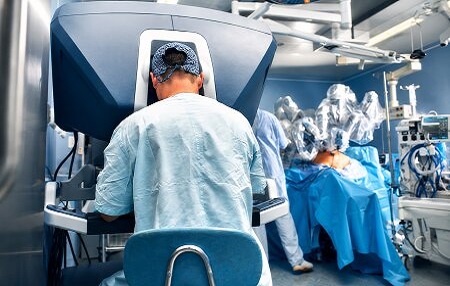
Patients searching for the Best Robotic Cancer Surgeon in Borivali are often looking for advanced surgical options that combine precision with a minimally invasive approach. Dr. Ramkishan Nag is a qualified Surgical Oncologist with MBBS, MS, and MCh (Surgical Oncology) qualifications, along with advanced training from Tata Memorial Hospital. He carefully evaluates every patient to determine whether robotic-assisted surgery is an appropriate option based on the type of cancer, stage of disease, and overall clinical condition.
Robotic-assisted cancer surgery is an advanced surgical technique that enables complex procedures to be performed with enhanced visualization, greater precision, and improved instrument control. The robotic platform does not replace the surgeon—it is a sophisticated tool that translates the surgeon's hand movements into highly accurate movements of specialized surgical instruments, allowing delicate cancer procedures to be performed with greater accuracy in selected cases.
Treatment recommendations are always individualized. Dr. Ramkishan Nag believes that robotic technology should be used only when it provides a meaningful clinical benefit for the patient. Every surgical plan is developed after detailed evaluation, multidisciplinary discussion when required, and careful consideration of the patient's diagnosis, treatment goals, and overall health.
Robotic-assisted surgery represents one of the significant advancements in modern surgical oncology. During the procedure, the surgeon operates from a dedicated console while controlling robotic arms equipped with specialized surgical instruments. The robotic system provides a high-definition three-dimensional view of the surgical field and allows precise instrument movement, supporting meticulous dissection during complex cancer operations.
Unlike conventional open surgery, robotic procedures are generally performed through small incisions. However, robotic surgery is not suitable for every patient or every cancer diagnosis. Selecting the most appropriate surgical approach requires comprehensive evaluation by a Surgical Oncologist with consideration of tumour characteristics, disease stage, previous treatments, and individual patient factors.
Robotic-assisted surgery has expanded the treatment options available in modern surgical oncology for appropriately selected patients. The technology enhances the surgeon's ability to perform delicate surgical procedures using high-definition visualization and refined instrument movements while maintaining complete surgeon control throughout the operation.
The primary objective of robotic-assisted surgery remains the same as any cancer operation—to perform safe and effective tumour removal while following accepted oncological principles. Whether robotic surgery is recommended depends entirely on clinical suitability rather than technology alone.
When robotic-assisted surgery is considered appropriate after careful evaluation, it may provide several potential advantages depending on the type of procedure and individual patient factors.
Not every cancer patient is an ideal candidate for robotic-assisted surgery. Suitability depends on multiple clinical factors including the type of cancer, tumour location, stage of disease, previous treatments, overall medical condition, imaging findings, and whether minimally invasive surgery can safely achieve the desired oncological outcome.
During consultation, Dr. Ramkishan Nag performs a comprehensive evaluation before discussing surgical options. If robotic-assisted surgery is appropriate, the procedure, expected benefits, possible limitations, and available alternatives are explained in detail so patients can make informed treatment decisions.
Robotic-assisted surgery differs from conventional open surgery primarily in the method used to access the surgical area. Traditional surgery generally requires larger incisions, whereas robotic-assisted procedures are performed through small ports using specialized robotic instruments controlled entirely by the operating surgeon.
The choice between robotic-assisted surgery, laparoscopic surgery, or conventional open surgery depends on the cancer diagnosis and the individual patient's condition. Dr. Ramkishan Nag recommends the surgical approach that best aligns with established oncological principles while prioritizing patient safety and treatment effectiveness.
One of the common misconceptions about robotic surgery is that the robot performs the operation independently. In reality, every movement of the robotic instruments is controlled directly by the surgeon. The robotic platform functions as an advanced surgical tool designed to enhance visualization, precision, and instrument control during carefully selected procedures.
Successful robotic cancer surgery depends not only on technology but also on appropriate patient selection, detailed preoperative planning, sound surgical judgment, and adherence to established cancer surgery principles. These factors remain central to every treatment recommendation made by Dr. Ramkishan Nag.
Dr. Ramkishan Nag is a qualified Surgical Oncologist with MBBS, MS, and MCh (Surgical Oncology) qualifications. He has received advanced training from Tata Memorial Hospital and is involved in the surgical management of a wide range of cancers. His approach combines evidence-based decision-making with individualized treatment planning to help patients understand the most appropriate surgical options for their diagnosis.
Every cancer diagnosis is unique. Dr. Ramkishan Nag carefully evaluates the type of cancer, imaging findings, disease stage, previous treatments, and the patient's overall health before recommending surgery. When robotic-assisted surgery is considered appropriate, it is incorporated into a comprehensive treatment plan designed around the patient's specific clinical needs.
Choosing a surgeon for robotic-assisted cancer surgery involves more than selecting advanced technology. Appropriate patient selection, careful surgical planning, and adherence to oncological principles are essential for achieving the best possible outcomes. Dr. Ramkishan Nag focuses on providing clear guidance so patients understand whether robotic surgery is the right option for their condition.
Robotic-assisted surgery is one of several surgical techniques used in cancer treatment. Depending on your diagnosis and clinical evaluation, other specialized services may also be relevant as part of your treatment journey.
Robotic-assisted cancer surgery is a minimally invasive surgical technique in which the surgeon controls robotic instruments from a console. The robotic platform enhances visualization and instrument precision while the surgeon remains in complete control throughout the procedure.
No. Suitability depends on several factors including the type of cancer, tumour location, stage of disease, previous treatments, and overall health. A detailed consultation is necessary before deciding the most appropriate surgical approach.
In selected patients, robotic-assisted surgery may provide enhanced visualization, improved instrument precision, smaller incisions, and potentially faster recovery. Individual outcomes depend on the procedure performed and the patient's clinical condition.
The robotic system is completely controlled by the surgeon. It does not make independent decisions or perform surgery on its own. Every movement is directed by the operating surgeon.
Dr. Ramkishan Nag carefully evaluates every patient before recommending robotic-assisted surgery. His approach focuses on individualized treatment planning, evidence-based surgical decision-making, and selecting the most appropriate technique for each patient's diagnosis.