Book Appointment Now

Transforming Lives Through Robotic GI Cancer Surgery in Mira Road
- On
- InRobotic Cancer
You don’t know how strong you are until being strong is the only choice you have
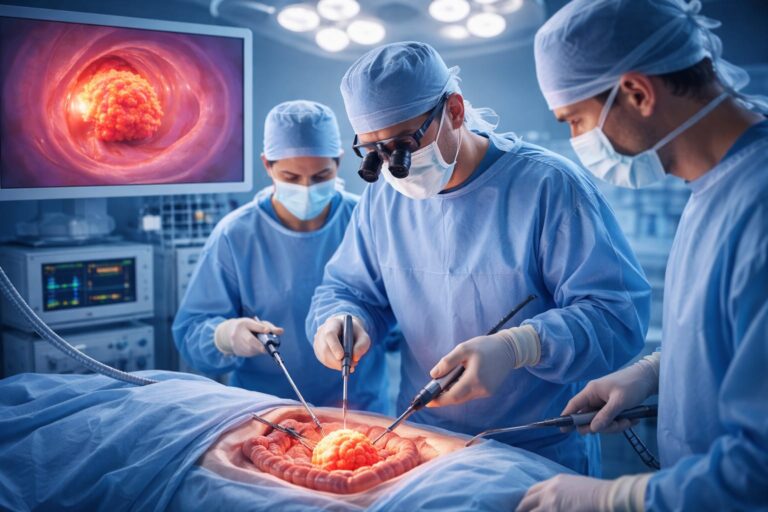
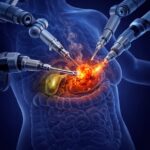
The field of cancer surgery has witnessed remarkable advancements in recent years, and one of the most revolutionary innovations is Robotic GI Cancer Surgery in Mira Road. This cutting-edge approach combines the expertise of highly skilled surgeons with the precision of robotic technology, offering patients safer, minimally invasive procedures with faster recovery times.
Dr. Ramkishan Nag, a renowned Robotic GI Cancer Specialist in Mira Road, has been at the forefront of this transformation. His commitment to patient-cantered care and adoption of advanced robotic systems ensures that individuals battling gastrointestinal cancers receive world-class treatment close to home.
This blog explores the many benefits of robotic GI cancer surgery, detailing how it enhances surgical outcomes while minimizing patient discomfort.
Meet Your Expert: A Surgeon Who Cares
Before we dive in, we want to introduce you to the expert behind this care Dr. Ramkishan Nag. Dr. Nag is a surgical oncologist here in Mira Road who specializes in these precise, life-changing procedures.
With over ten years of experience and training from the renowned Tata Memorial Hospital, Dr. Ramkishan Nag has performed more than 1,500 successful cancer surgeries. But what truly sets him apart is his philosophy. He believes that treating cancer is not just about removing disease; it’s about caring for the whole person. When you meet with him, you’ll find a doctor who listens, explains things clearly, and treats you with the compassion and respect you deserve.
Robotic Gi Cancer Surgery in Mira Road: Minimally Invasive Approach
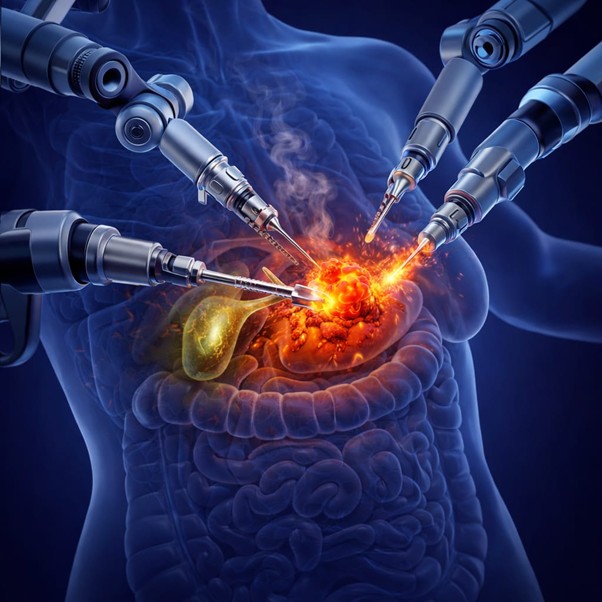
Traditional open surgeries often require large incisions, leading to extended hospital stays, significant scarring, and prolonged recovery. Robotic GI cancer surgery, however, is minimally invasive, involving only small incisions through which robotic instruments are inserted.
- Procedures are performed through small abdominal incisions (often <1 cm), reducing tissue trauma.
- Key benefits include less intraoperative blood loss, decreased postoperative pain, minimal scarring, and shorter hospital stays.
- Patients typically recover faster and resume normal activities sooner, facilitating early initiation of adjuvant therapies like chemotherapy.
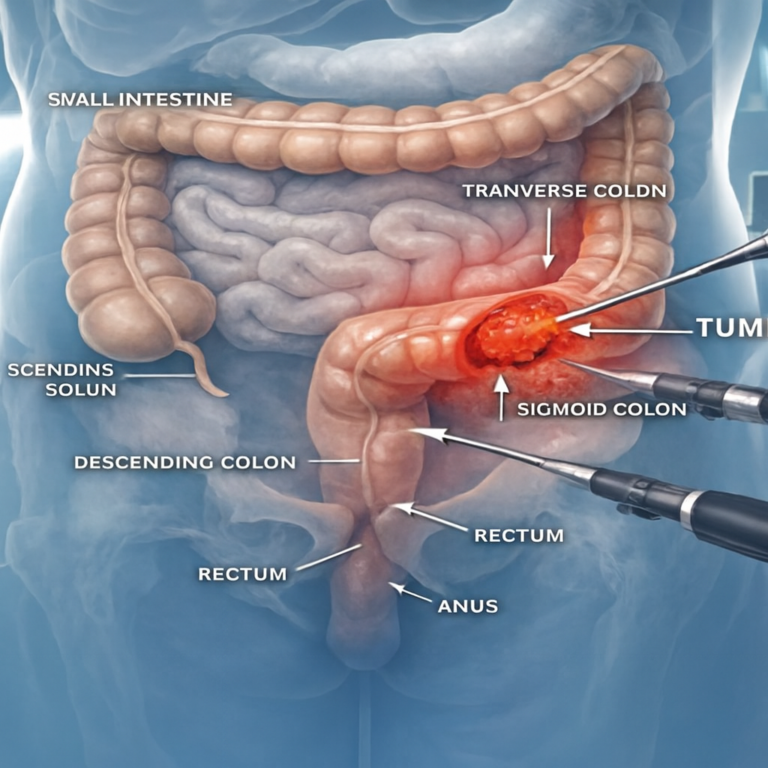
This approach reduces trauma to the body, lowers the risk of complications, and allows patients to return to their daily lives much faster. For example, patients undergoing Robotic Colorectal Cancer Surgery in Mira Road or Minimally Invasive Stomach Cancer Surgery in Mira Road benefit from shorter hospital stays, minimal scarring, and improved cosmetic outcomes.
Robotic Gi Cancer Surgery in Mira Road: Enhanced Precision
Robotic systems provide surgeons with unmatched precision. The robotic arms filter out natural hand tremors, enabling exact movements during delicate procedures. This precision is particularly vital in surgeries involving the pancreas, liver, or stomach, where millimetre-level accuracy can determine the success of the operation.
1. Robotic Surgery in GI Oncology
Modern robotic systems (e.g., the da Vinci Surgical System) augment a surgeon’s dexterity through articulated instruments with seven degrees of freedom, high-definition 3D visualization, and tremor elimination. These capabilities enable:
- Microscale precision in confined or complex anatomical regions (e.g., pancreas, deep pelvis).
- Minimally invasive access, reducing incision size, postoperative pain, and hospital stay.
- Enhanced oncological control via meticulous dissection and lymph node preservation.
- Reduced intraoperative complications, such as bleeding and nerve injury.
Clinical studies demonstrate that robotic procedures in colorectal, gastric, pancreatic, and hepatobiliary cancers show lower conversion-to-open rates, less operative blood loss, improved lymph node yield, and, in some series, better functional outcomes.
2. AI Integration in Robotic Surgery
AI amplifies robotic surgery by providing dynamic decision support and workflow optimization:
- Surgical Simulation & Digital Twins: AI enables preoperative planning, patient-specific simulations, and rehearsal, improving spatial understanding and operative efficiency.
- Computer Vision & Scene Understanding: Deep learning models detect anatomical landmarks, segment critical structures, and monitor instrument motion, creating a safer intraoperative environment.
- Data Science & Predictive Analytics: AI algorithms aggregate multimodal surgical data to predict intraoperative risks, guide decision-making, and personalize patient care.
- Robot Autonomy & Reinforcement Learning: AI facilitates partial automation of repetitive or high-precision tasks like suturing, polyp tracking, or tissue retraction under surgeon supervision.
This integration allows surgeons to operate with enhanced accuracy, consistency, and reduced cognitive load, fostering procedure standardization and improving reproducibility across institutions.
3. Nanorobotics and Microscale Precision
Emerging nanorobotics complements robotic GI surgery by enabling sub-millimeter interventions:
- Autonomous Tumor Ablation Agents: Nanoscale robots can navigate the GI tract to deliver therapy directly to neoplastic tissue without harming surrounding structures.
- Bio responsive and Stimuli-Activated Materials: Nanobots release drugs in response to pH, enzymatic activity, or AI-guided real-time signals.
- Closed-Loop Feedback Systems: Integrating onboard sensors allows continuous adaptation to local tissue dynamics, ensuring precise targeting.
- Magnetically and Chemically Actuated Propulsion: Enables maneuvering through complex GI anatomy for site-specific intervention or microsurgical tasks.
Such technologies are still primarily preclinical, yet they highlight the potential for combining robotic microsurgery with interactive nanoscopic precision effectively bridging interventional scales from millimeters to nanometers.
4. Clinical Outcomes and Advantages
Compared to conventional laparoscopic or open surgery:
- Precision & Visualization: Improved 3D vision and instrument articulation allow complex dissections in narrow or deep regions.
- Minimally Invasive: Smaller incisions reduce pain, scarring, and hospital stay.
- Reduced Complications: Fewer wound infections, improved nerve preservation, and lower conversion rates.
- Operator Ergonomics: Consoles reduce surgeon fatigue, enabling longer, safer procedures.
- Enhanced Recovery: Faster return to normal activity and initiation of adjuvant therapy.
For instance, Pancreatic Cancer Robotic Surgery in Mira Road requires meticulous dissection and reconstruction. Robotic technology ensures safer tumour removal while preserving surrounding healthy tissue, improving both survival rates and quality of life.
Robotic Gi Cancer Surgery in Mira Road: 3D High-Definition Visualization
Robotic platforms offer surgeons a 3D high-definition view of the surgical field, magnified up to 10 times. This enhanced visualization allows surgeons to identify and preserve critical structures such as nerves and blood vessels, reducing the risk of accidental damage.
Key Components of the System
1. Robotic Platform:
Systems like the da Vinci Surgical System provide robotic arms equipped with miniature instruments capable of 360° articulation.
2. 3D HD Camera:
- Provides stereoscopic vision with depth perception.
- Enhances the identification of critical structures such as blood vessels, lymph node and tumor margins.
- Delivers magnified views of the surgical field, enabling fine dissection.
3. Surgeon Console:
The surgeon operates from a console controlling robotic instruments while viewing the magnified 3D internal anatomy.
4. Mixed Reality and Virtual Navigation:
- Preoperative imaging (CT, MRI) is converted into patient-specific 3D models.
- Mixed reality systems (e.g., HoloLens with software like Carna Life Hollo or RUS™) allow surgeons to overlay 3D anatomical reconstructions onto the patient.
- Intraoperative guidance supports accurate port placement, trajectory planning for resection, and identification of unresectable or difficult-to-access lesions.
Clinical Applications
1. GI Cancer Types:
- Stomach, esophagus, colon, rectum, liver, pancreas, gallbladder, and bile ducts.
- Complex anatomies such as gastroesophageal junction (EGJ) and hepatopancreatobiliary (HPB) tumors.
2. Surgical Procedures:
- Robotic gastrectomy (distal, total)
- Robotic colectomy and rectal surgery
- Robotic esophagectomy
- Robotic liver and pancreatic resections
3. Intraoperative Advantages:
- Enhanced spatial awareness via 3D visualization reduces errors and intraoperative complications.
- Robotic arms, combined with HD 3D imaging, enhance dexterity in deep or narrow spaces.
- Enables precise lymph node dissection and margin-negative tumor resection (R0).
3D Reconstruction Workflow:
- Acquisition of high-resolution CT or MRI scans.
- Segmentation of organs, vessels, and tumors.
- Generation of a 3D interactive model (including patient-specific pneumoperitoneum deformation for abdominal surgery).
- Virtual surgical planning with port placement and instrument simulation.
- Intraoperative guidance via display at the console or augmented reality devices.
Benefits of 3D HD Visualization in Robotic GI Surgery
Enhanced Precision: Improved depth perception enables meticulous dissection.
Minimally Invasive: Small incisions reduce pain, blood loss, and recovery time.
Reduced Complications: Lower risk of inadvertent injury to vessels or nerves.
Improved Oncologic Outcomes: Accurate margin assessment and lymphadenectomy.
Integration with AI: Emerging AI-based surgical navigation assists in intraoperative decision-making.
In procedures like Liver Cancer Robotic Surgery Mira Road, this visualization ensures precise tumour removal while preserving healthy tissue, thereby improving long-term outcomes. Patients benefit from reduced complications and better functional recovery.
Robotic Gi Cancer Surgery in Mira Road: Greater Dexterity
The robotic instruments mimic the movement of the human wrist but with far greater dexterity. They can rotate and bend in ways that human hands cannot, enabling surgeons to perform complex manoeuvres in confined spaces.
Mechanisms of Enhanced Dexterity
1. Articulated Robotic Instruments:
Robotic systems such as the da Vinci Surgical System use endo-wristed instruments with 7 degrees of freedom, offering motion capabilities similar to the human hand but inside the confined spaces of the abdomen.
These instruments allow fine manipulation around delicate structures, such as blood vessels near pancreatic or colorectal tumors, which would be challenging with straight laparoscopic tools.
2. Tremor Filtration and Motion Scaling:
Natural hand tremors are filtered by the robotic platform.
Surgeons can scale their input, translating larger hand movements into micro-movements inside the body, enhancing precision during critical dissections or resections.
3. High-Definition 3D Visualization:
Operative fields are displayed in high-definition stereoscopic 3D, providing depth perception crucial for accurate tissue handling.
This visualization allows meticulous dissection of lymph nodes and perivascular tissue, improving oncological outcomes.
4. Ergonomic Surgeon Console:
Surgeons operate from a seated console, reducing fatigue during lengthy GI procedures.
Steady ergonomics improves fine motor control, indirectly increasing dexterity during complex maneuvers.
5. Integration with Imaging and Feedback Systems:
Fluorescence imaging guides identification of vascular and lymphatic structures.
Realtime feedback systems assist in precise placement of staples or sutures, further enhancing dexterity in intricate operations.
Clinical Applications Demonstrating Dexterity Benefits
1. Pancreatic Surgery (e.g., Robotic Whipple, Distal Pancreatectomy):
- Improved ability to preserve vascular structures and spleen.
- Lower intraoperative blood loss and reduced conversion-to-open rates, attributable to precise tissue handling.
2. Colorectal and Rectal Cancer Surgery:
- Superior mesolectal dissection in narrow pelvic anatomy reduces complications and improves oncological margins.
- Robotic dexterity allows safer preservation of nerves controlling urinary and sexual function.
3. Gastric Cancer Surgery:
- Enhanced instrument motion aids in lymphadenectomy and careful tumor resection.
- Facilitates minimally invasive operation in dense tissue planes with less trauma to surrounding organs.
This feature is especially beneficial in Advanced Robotic Surgery for GI Cancer in Mira Road, where tumours are located in challenging anatomical regions. The enhanced dexterity allows surgeons to perform intricate suturing and reconstructions with ease, ensuring optimal surgical outcomes.
Robotic Gi Cancer Surgery in Mira Road: Reduced Blood Loss
One of the most significant advantages of robotic surgery is reduced blood loss. The precision of robotic instruments minimizes tissue trauma, leading to fewer transfusions and faster recovery.
Patients undergoing Robotic Colorectal Cancer Surgery in Mira Road often experience less intraoperative bleeding compared to traditional methods. This not only improves safety but also enhances recovery by reducing the risk of anaemia and related complications.
Robotic Gi Cancer Surgery in Mira Road: Low Risk of Infection & Complications
Smaller incisions and reduced tissue handling lower the risk of infection and postoperative complications. Robotic surgery ensures sterile, controlled environments, which is crucial for cancer patients whose immune systems may already be compromised.
By minimizing exposure and trauma, robotic procedures significantly reduce the likelihood of wound infections, hernias, and other complications commonly associated with open surgeries.
Robotic Gi Cancer Surgery in Mira Road: Less Postoperative Pain
Patients report significantly less postoperative pain after robotic surgery compared to open procedures. This reduction in pain translates to lower dependence on pain medications, faster mobilization, and improved overall patient satisfaction.
For individuals undergoing Minimally Invasive Stomach Cancer Surgery in Mira Road, reduced pain means they can begin oral intake sooner, enhancing nutritional recovery and overall well-being.
Robotic Gi Cancer Surgery in Mira Road: Pre-Surgery Preparation
Before undergoing robotic GI cancer surgery, patients undergo thorough evaluations including imaging, blood tests, and consultations. Dr. Ramkishan Nag emphasizes patient education, ensuring individuals understand the procedure, risks, and recovery expectations.
Proper preparation enhances surgical outcomes and reduces anxiety. Patients are guided through lifestyle adjustments, dietary recommendations, and prehabilitation exercises to strengthen their bodies before surgery.
Robotic Gi Cancer Surgery in Mira Road: Faster Recovery
Robotic surgery enables faster recovery, allowing patients to resume normal activities within weeks rather than months. This is particularly important for individuals undergoing Postoperative Recovery Robotic GI Surgery Mira Road, where early mobilization and rehabilitation are key to long-term success.
Patients benefit from shorter hospital stays, quicker return to work, and improved quality of life. Faster recovery also reduces healthcare costs, making robotic surgery a practical choice for many families.
Final Thoughts
Robotic GI cancer surgery represents a new era in cancer care, combining cutting-edge technology with compassionate patient support. Under the expertise of Dr. Ramkishan Nag, patients in Mira Road can access world-class surgical interventions that prioritize safety, precision, and recovery.
Want to Talk? Dr. Ramkishan Nag is Here for You
You can book a consultation with Dr. Ramkishan Nag at his clinic in Urban Grandeur, Kanakia, Mira Road, Mumbai.
Call: +91-9827080338
Email: ramkishannag@gmail.com
Let’s talk about what’s possible for you because your recovery deserves more than survival; it deserves peace, confidence, and comfort, too.
FAQs
Q1: What is Robotic GI Cancer Surgery in Mira Road?
It is a minimally invasive surgical technique using robotic systems to treat gastrointestinal cancers with enhanced precision and faster recovery.
Q2: Who is the best Robotic GI Cancer Specialist in Mira Road?
Dr. Ramkishan Nag is a leading expert, offering advanced robotic procedures for colorectal, stomach, pancreatic, and liver cancers.
Q3: How does robotic surgery differ from traditional surgery?
Robotic surgery uses small incisions, 3D visualization, and robotic arms for greater precision, resulting in less pain, reduced blood loss, and quicker recovery.
Q4: Is robotic surgery safe for liver and pancreatic cancers?
Yes, robotic surgery is highly effective for complex cancers like liver and pancreatic tumours, offering better outcomes with lower risks.
Q5: What is the recovery time after robotic GI cancer surgery?
Most patients recover within 2–4 weeks, significantly faster than traditional open surgery.
Robotic Gi Cancer Surgery In Mira Road Robotic Gi Cancer Surgery In Mira Road Robotic Gi Cancer Surgery In Mira Road Robotic Gi Cancer Surgery In Mira Road Robotic Gi Cancer Surgery In Mira Road Robotic Gi Cancer Surgery In Mira Road Robotic Gi Cancer Surgery In Mira Road Robotic Gi Cancer Surgery In Mira Road Robotic Gi Cancer Surgery In Mira Road Robotic Gi Cancer Surgery In Mira Road Robotic Gi Cancer Surgery In Mira Road Robotic Gi Cancer Surgery In Mira Road Robotic Gi Cancer Surgery In Mira Road Robotic Gi Cancer Surgery In Mira Road Robotic Gi Cancer Surgery In Mira Road Robotic Gi Cancer Surgery In Mira Road Robotic Gi Cancer Surgery In Mira Road Robotic Gi Cancer Surgery In Mira Road Robotic Gi Cancer Surgery In Mira Road Robotic Gi Cancer Surgery In Mira Road Robotic Gi Cancer Surgery In Mira Road Robotic Gi Cancer Surgery In Mira Road
Newsletter Updates
Enter your email address below and subscribe to our newsletter