Book Appointment Now
Brighter Futures Begin with Liver Tumour Surgery in Mira Road
This is the spark that ignites ideas and fuels transformation; from here, the path forward becomes clear
Liver Tumour Surgery in Mira Road is a highly specialized medical procedure designed to treat both benign and malignant tumours of the liver. The liver is one of the most vital organs in the human body, responsible for detoxification, metabolism, and digestion. When tumours develop, they can compromise these essential functions, leading to serious health risks.
At Dr. Ramkishan Nag’s clinic, patients benefit from world-class surgical expertise combined with compassionate care. With the growing demand for Liver cancer surgery Mira Road, patients now have access to advanced treatment options close to home. The clinic’s approach emphasizes precision, safety, and holistic recovery, ensuring that every patient receives personalized care tailored to their unique condition.
Meet Your Expert: A Surgeon Who Cares
Before we dive in, we want to introduce you to the expert behind this care Dr. Ramkishan Nag. Dr. Ramkishan Nag is a surgical oncologist here in Mira Road who specializes in these precise, life-changing procedures.
With over ten years of experience and training from the renowned Tata Memorial Hospital, Dr. Ramkishan Nag has performed more than 1,500 successful cancer surgeries. But what truly sets him apart is his philosophy. He believes that treating cancer is not just about removing disease; it’s about caring for the whole person. When you meet with him, you’ll find a doctor who listens, explains things clearly, and treats you with the compassion and respect you deserve.
Liver Tumour Surgery in Mira Road: Eligibility Assessment
Determining eligibility for Liver Tumour Surgery in Mira Road is the first step in the treatment journey. Not all patients are suitable candidates, and careful evaluation is essential to ensure safety and success.
Key factors considered include:
1. Tumour-Specific Considerations
Surgical options vary based on whether the cancer is primary (e.g., hepatocellular carcinoma, cholangiocarcinoma) or secondary (metastatic to the liver).
1.1 Hepatocellular carcinoma (HCC):
- Surgery considered if the tumour is confined to the liver.
- Absence of extrahepatic spread.
- No macrovascular invasion, or invasion if surgical reconstruction is feasible.
- Number and size: often a single tumor but select guidelines allow multiple lesions if liver reserve is adequate.
- Tumor location must permit safe resection without compromising essential liver function.
1.2 Cholangiocarcinoma (CCA):
- Intrahepatic CCA: respectable if R0 margins are feasible, solitary, no major vascular invasion.
- Perihilar CCA: may need extended hepatectomy and potential vascular/biliary reconstruction; contraindications include bilateral bile duct involvement, contralateral vascular compromises.
1.3 Liver metastases:
- Resection possible if complete tumor removal is feasible while preserving adequate functional liver parenchyma.
- Techniques like two-stage hepatectomy, ALPPS, or preoperative portal vein embolization may increase respectability.
2. Liver Function and Reserve
Evaluation of the future liver remnant (FLR) and underlying parenchymal health is critical:
2.1 Child-Pugh score:
- Class A: generally eligible for major resection.
- Class B: high-risk, resection considered only in select cases.
- Class C: usually contraindicated.
MELD or ALBI scores provide additional quantitative assessments.
2.2 Imaging indicators:
- Cirrhosis, nodularity, segmental atrophy, widened fissures, caudate hypertrophy.
- Portal hypertension: splenomegaly, portosystemic collaterals, dilated portal vein (>13 mm).
- Steatosis reduces hepatic reserve, especially after chemotherapy.
2.3 FLR threshold:
- Normal liver: ≥20–25% of total liver volume.
- Fatty liver/chemotherapy recipient: ≥30%.
- Cirrhosis: ≥40%.
3. Patient Factors
- Performance status and comorbidities: must tolerate major surgery.
- Age: not an absolute contraindication; frailty is more relevant.
- Psychosocial readiness: especially for transplant, including adherence to post-op care.
- Lifestyle factors: cessation of alcohol, smoking, control of obesity or metabolic syndrome.
4. Surgical Options
- Partial hepatectomy / liver resection: for localized tumors with adequate FLR and liver function.
- Liver transplantation: for patients with unresectable tumors or poor liver function; often guided by Milan criteria for HCC.
Minimally invasive techniques:
- Laparoscopic or robotic liver resection.
- Ablation methods: radiofrequency, microwave, cryoablation.
- Embolization: TACE, Y-90 radioembolization (for downstaging or bridging to surgery).
5. Contraindications
- Severe extrahepatic disease.
- Insufficient FLR despite optimization.
- Decompensated liver function (Child-Pugh C, severe portal hypertension).
- Non-constructible major vascular involvement.
- Poor overall performance or severe comorbidities.
Patients who meet these criteria are referred to Hepatic resection specialists Mira Road, who ensure that surgery is both feasible and beneficial. This meticulous assessment minimizes risks and maximizes outcomes.
Liver Tumour Surgery in Mira Road: Preoperative Evaluation
Before undergoing Liver Tumour Surgery in Mira Road, patients undergo a comprehensive preoperative evaluation. This stage is crucial for planning the surgery and reducing complications.
The evaluation includes:
1. Multidisciplinary Evaluation
Patients must be assessed by a team including:
- Hepatologists: for liver disease evaluation and optimization
- Surgeons: for technical feasibility and respectability assessment
- Anaesthesiologists: for perioperative anaesthesia planning
- Radiologists: for imaging-based determination of liver anatomy and tumor characteristics
This team evaluates both tumor-related factors (location, size, multiplicity, vascular invasion) and liver related factors (functional reserve, fibrosis, cirrhosis, portal hypertension).
2. Patient History and Physical Examination
Essential history elements include:
- Past liver disease, viral hepatitis (B, C), alcohol use, metabolic syndrome, drug exposure
- Prior blood transfusions or surgeries
- Family history of liver or bleeding disorders
Physical examination should assess for:
- Signs of chronic liver disease (jaundice, spider angiomas, palmar erythema, gynecomasti) Portal hypertension (splenomegaly, ascites, caput medusae)
3. Laboratory and Functional Liver Assessment
Standard Tests:
- Complete blood count (CBC): assess thrombocytopenia, anaemia
- Comprehensive metabolic panel (CMP): bilirubin, transaminases, albumin
- Coagulation profile: PT/INR
- Viral hepatitis markers (HAV, HBV, HCV)
- Liver function markers for synthetic capacity: albumin, coagulation
Quantitative Liver Function Tests (optional based on risk):
- Indocyanine Green (ICG) clearance
- Aminopyrine breath test
- Monoethylglycinexylidide (MEGX) test
- These tests correlate with hepatic functional reserve and postoperative risk.
4. Imaging Assessment
Comprehensive imaging is mandatory for:
- Tumor characterization: number, size, location, vascular invasion, biliary involvement
- Liver parenchyma evaluation: cirrhosis, steatosis, lobar atrophy
- Vascular anatomy: portal vein, hepatic artery, hepatic veins
- Biliary anatomy: ductal variants, patency
Assessment of future liver remnant (FLR) volume:
- Normal liver: ≥20–25%
- Steatosis or chemotherapy-exposed liver: ≥30%
- Cirrhosis: ≥40%
- Identification of portal hypertension features: dilated portal vein (>13 mm), varices, ascites, splenomegaly
Imaging modalities:
- Ultrasound (US) and Doppler: screening and portal flow assessment
- Computed Tomography (CT): lesion characterization, volumetry, vascular mapping
- Magnetic Resonance Imaging (MRI): assessment of fat content, fibrosis, vascular and biliary anatomy
- MR Elastography: evaluates liver stiffness (>5.3 kPa indicates increased postoperative risk)
5. Tumour-Specific Considerations
Indications for resection:
- Solitary or limited lesions with no extrahepatic spread
- Adequate FLR
- Preserved liver function (Child-Pugh Class A or select B)
Contraindications:
- Extrahepatic metastases
- Insufficient FLR
- Decompensated cirrhosis (Child-Pugh C)
- Unreconstructible vascular invasion (main portal vein, IVC)
- Poor performance status or major comorbidities precluding surgery
Tumour types of considerations:
- Hepatocellular carcinoma (HCC): vascular invasion, multifocality, portal hypertension influence respectability
- Intrahepatic cholangiocarcinoma (iCCA): R0 resection, vascular reconstruction feasibility, solitary lesion preferred
- Perihilar cholangiocarcinoma (pCCA): central location may require extended hepatectomy, vascular/biliary reconstruction
- Liver metastases: resection feasible if primary tumor controlled, adequate parenchymal preservation, negative margins achievable
6. Risk Stratification
Risk of perioperative morbidity and mortality is primarily affected by:
- Severity of liver disease (cirrhosis, portal hypertension, hepatic decompensation)
- Type and extent of surgery
- Patient comorbidities
At Liver tumour hospital Mira Road, advanced diagnostic facilities provide precise assessments, enabling surgeons to plan with confidence.
Liver Tumour Surgery in Mira Road: Surgical Options
There are multiple surgical options available for Liver Tumour Surgery in Mira Road, depending on the patient’s condition and tumour characteristics.
- Partial hepatectomy: Removal of a portion of the liver affected by the tumour.
- Lobectomy: Removal of an entire lobe of the liver.
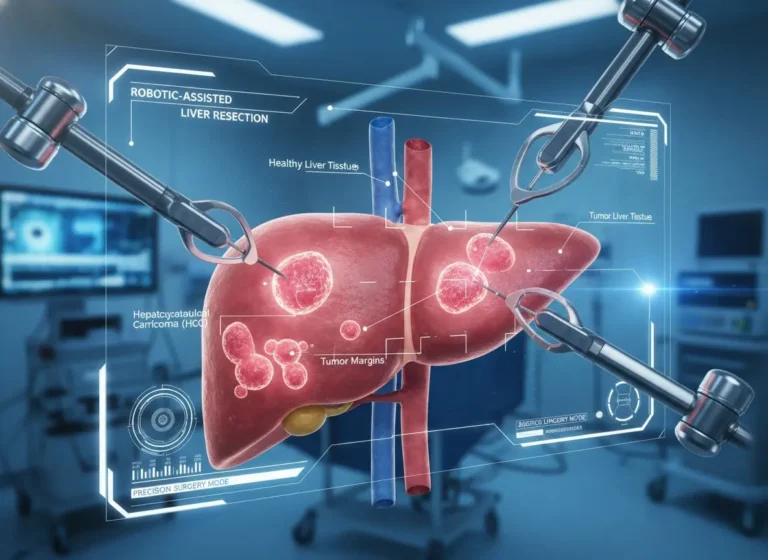
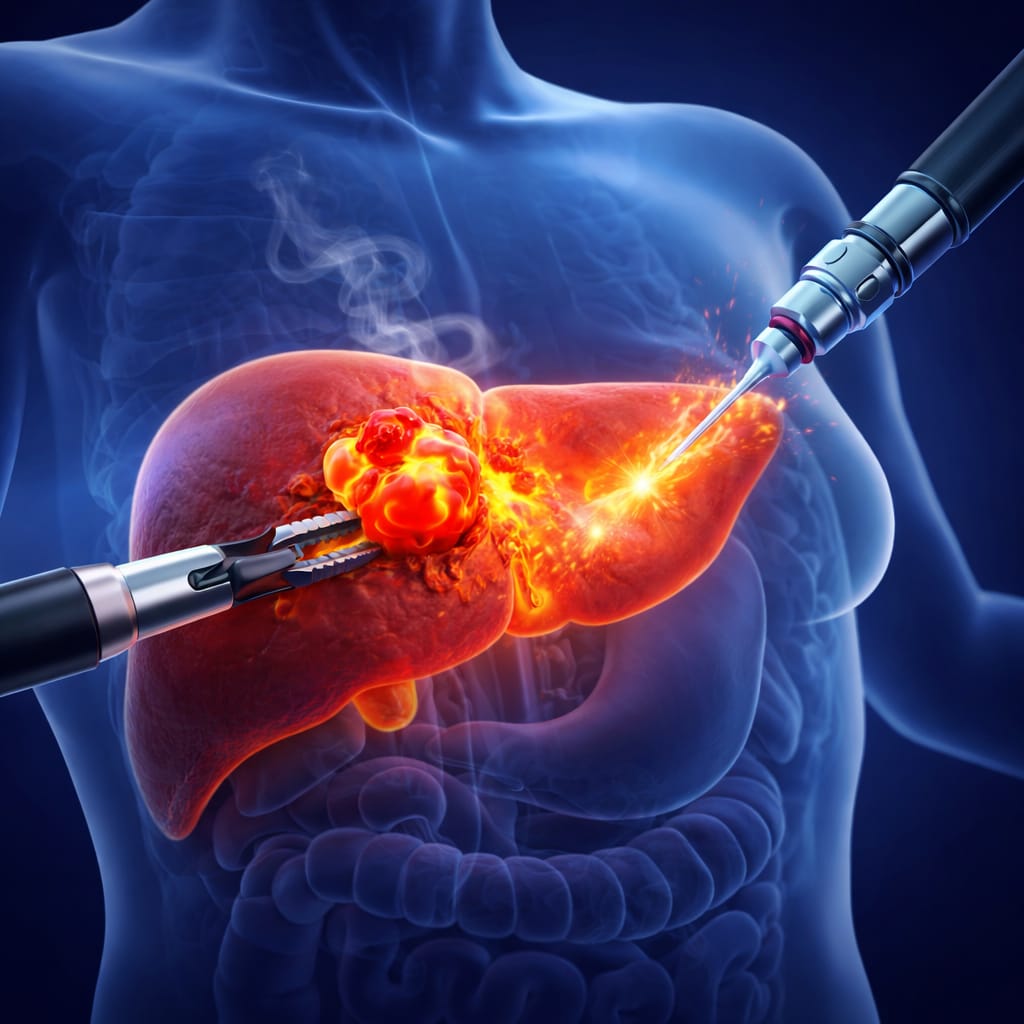
- Minimally invasive liver surgery in Mira Road: Laparoscopic or robotic techniques that reduce pain, scarring, and recovery time.
The choice of surgery depends on tumour size, location, and patient health. Minimally invasive approaches are increasingly preferred for eligible patients, offering faster recovery and fewer complications.
Liver Tumour Surgery in Mira Road: Tumour Type and Stage
The type and stage of the tumour play a critical role in determining the approach to Liver Tumour Surgery in Mira Road.
- Benign tumours: Such as adenomas or haemangiomas, may require limited resections.
- Malignant tumours: Including hepatocellular carcinoma and cholangiocarcinoma, often demand extensive surgery.
- Early-stage cancers: Have better outcomes and higher survival rates.
- Advanced-stage cancers: May require combined treatments, including chemotherapy or targeted therapy.
Top liver surgeons near Mira Road tailor surgical strategies based on tumour biology, ensuring personalized and effective care.
Liver Tumour Surgery in Mira Road: Pre-Surgery Preparation
Preparation for Liver Tumour Surgery in Mira Road is a vital step in ensuring successful outcomes.
Patients are advised to:
- Avoid alcohol and smoking: To protect liver function.
- Maintain a balanced diet: Rich in proteins and vitamins to support healing.
- Engage in physical conditioning: Gentle exercises to improve stamina.
- Seek psychological counselling: To reduce anxiety and prepare mentally.
At Liver tumour hospital Mira Road, multidisciplinary teams provide holistic preparation, ensuring patients are fully ready for surgery.
Liver Tumour Surgery in Mira Road: Intraoperative Considerations
During Liver Tumour Surgery in Mira Road, surgeons prioritize precision and safety.
Key intraoperative considerations include:
- Intraoperative ultrasound: Guiding tumour removal with accuracy.
- Advanced anaesthesia protocols: Minimizing risks during surgery.
- Blood loss control techniques: Ensuring patient stability throughout the procedure.
The expertise of Hepatic resection specialists Mira Road ensures that tumours are removed effectively while preserving healthy liver tissue.
Liver Tumour Surgery in Mira Road: Postoperative Care
Postoperative care following Liver Tumour Surgery in Mira Road is critical for recovery and long-term success.
Patients receive:
- Monitoring of liver function: Detecting complications early.
- Pain management: Ensuring comfort during recovery.
- Nutritional support: Accelerating healing with tailored diets.
- Physiotherapy: Helping patients regain strength and mobility.
At post-surgery liver care Mira Road, specialized nursing and rehabilitation support ensure patients recover smoothly.
Liver Tumour Surgery in Mira Road: Recovery Duration
Recovery after Liver Tumour Surgery in Mira Road varies depending on the type of surgery performed.
- Minimally invasive procedures: Patients may be discharged within 5–7 days.
- Open resections: Hospital stays typically last 10–14 days.
- Full recovery: Usually takes 6–12 weeks, depending on patient health and surgical complexity.
Regular follow-ups are essential to monitor progress and detect any complications early.
Liver Tumour Surgery in Mira Road: Liver Regeneration
One of the most remarkable aspects of Liver Tumour Surgery in Mira Road is the liver’s ability to regenerate. Even after significant resections, the liver can regrow to its original size within weeks. This unique property ensures that patients can regain normal liver function and return to daily life after surgery.
Liver Tumour Surgery in Mira Road: Risks and Complications
While Liver Tumour Surgery in Mira Road is generally safe, it carries certain risks.
Potential complications include:
- Bleeding during or after surgery.
- Infections at the surgical site.
- Bile leakage requiring intervention.
- Liver failure in rare cases.
With Top liver surgeons near Mira Road, these risks are minimized through advanced techniques and vigilant monitoring.
Liver Tumour Surgery in Mira Road: Diet and Lifestyle Post-Surgery
Diet and lifestyle play a crucial role in recovery after Liver Tumour Surgery in Mira Road.
Patients are advised to:
- Consume high-protein, low-fat meals: To aid recovery.
- Avoid alcohol: To protect liver health.
- Engage in regular exercise: To improve stamina and overall well-being.
- Manage stress effectively: Supporting emotional health during recovery.
Guidance from post-surgery liver care Mira Road ensures patients adopt sustainable habits for long-term health.
Liver Tumour Surgery in Mira Road: Follow-Up Care
Follow-up care after Liver Tumour Surgery in Mira Road is essential for long-term success.
It includes:
- Regular imaging: Detecting recurrence early.
- Blood tests: Monitoring liver function.
- Consultations: With surgeons and oncologists for ongoing support.
Structured follow-up programs at Liver tumour hospital Mira Road provide reassurance and continuous monitoring.
Liver Tumour Surgery in Mira Road: Multidisciplinary Support
Successful Liver Tumour Surgery in Mira Road requires collaboration among multiple specialists.
The team includes:
- Surgeons: For precise resections.
- Oncologists: For cancer management.
- Radiologists: For imaging guidance.
- Dietitians: For nutritional support.
- Counsellors: For emotional care.
This multidisciplinary approach ensures comprehensive treatment and recovery.
Final Thoughts
Liver Tumour Surgery in Mira Road represents a blend of advanced surgical expertise and compassionate patient care. With access to Liver cancer surgery Mira Road, patients can receive world-class treatment close to home. Dr. Ramkishan Nag and his team provide hope, healing, and holistic recovery, ensuring that every patient receives personalized care and support.
Talk to Us Today: Book Your Consultation
If you or someone you love needs cancer surgery or a second opinion, don’t wait. Early action can save lives.
You can meet Dr. Ramkishan Nag at either of these trusted locations:
Dr. Ramkishan Nag Clinic
Urban Grandeur, Kanakia, Mira Road, Mumbai
HCG Cancer Hospital
Holy Cross Road, IC Colony, Borivali West, Mumbai
To book an appointment, call +91-9827080338 or
email ramkishannag@gmail.com
Visit the website: www.drramkishannag.com
FAQs
Q1. What is the cost of liver tumour surgery in Mira Road?
The Cost of liver tumour surgery Mira Road depends on the type of surgery, hospital facilities, and patient condition. Minimally invasive procedures may reduce overall expenses due to shorter hospital stays.
Q2. Who are the best specialists for liver tumour surgery in Mira Road?
Patients can consult Hepatic resection specialists Mira Road like Dr. Ramkishan Nag, renowned for expertise in complex liver surgeries.
Q3. Is minimally invasive liver surgery available in Mira Road?
Yes, minimally invasive liver surgery in Mira Road is available, offering faster recovery and reduced complications.
Q4. How long does recovery take after liver tumour surgery?
Recovery after Liver Tumour Surgery in Mira Road typically takes 6–12 weeks, depending on the surgical approach and patient health.
Newsletter Updates
Enter your email address below and subscribe to our newsletter