
Book Appointment Now
Gallbladder Tumour Treatment in Mira Road – Advanced, Compassionate Care You Can Trust
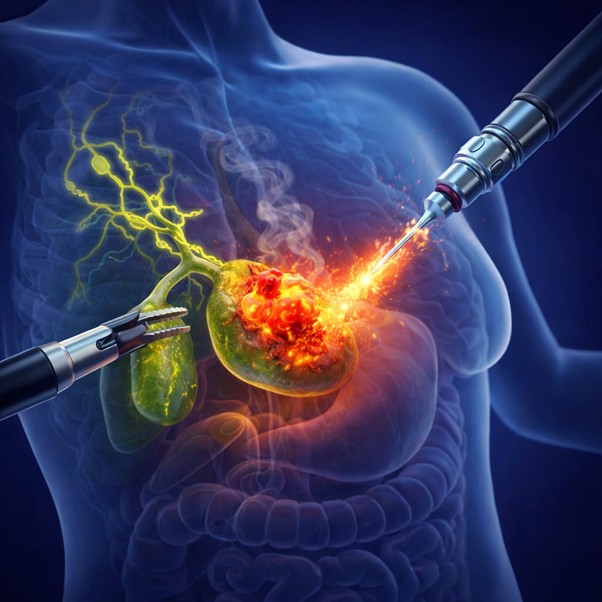
Gallbladder Tumor Treatment In Mira Road
The Surprising Fact
When it comes to Gallbladder Tumour Treatment in Mira Road, patients often face uncertainty and fear. Gallbladder cancer is a rare but aggressive disease, and timely intervention can make a significant difference in outcomes. At Dr. Ramkishan Nag’s clinic, patients receive comprehensive care that blends advanced surgical techniques, modern therapies, and compassionate support. This blog explores every aspect of gallbladder tumour management, from early detection to lifestyle prevention, ensuring patients and families are well-informed.
Meet Your Expert: A Surgeon Who Cares
Before we dive in, we want to introduce you to the expert behind this care Dr. Ramkishan Nag. Dr. Nag is a surgical oncologist here in Mira Road who specializes in these precise, life-changing procedures.
With over ten years of experience and training from the renowned Tata Memorial Hospital, Dr. Ramkishan Nag has performed more than 1,500 successful cancer surgeries. But what truly sets him apart is his philosophy. He believes that treating cancer is not just about removing disease; it’s about caring for the whole person. When you meet with him, you’ll find a doctor who listens, explains things clearly, and treats you with the compassion and respect you deserve.
Gallbladder Tumour Treatment in Mira Road: Early Detection is Critical
Early detection of gallbladder tumours is vital for successful Gallbladder Tumour Treatment in Mira Road. Symptoms such as persistent abdominal pain, jaundice, nausea, or unexplained weight loss should never be ignored. Unfortunately, gallbladder cancer often remains silent until advanced stages. Regular health check-ups, imaging, and awareness campaigns can help identify the disease earlier. Patients seeking Gallbladder Tumour Specialist in Mira Road benefit from Dr. Nag’s expertise in recognizing subtle signs and initiating prompt diagnostic evaluation.
Gallbladder Tumour Treatment in Mira Road: Diagnostic Evaluation
Accurate diagnosis is the cornerstone of effective Gallbladder Tumour Treatment in Mira Road. Diagnostic tools include:
- Ultrasound and CT scans for initial detection.
- MRI and PET scans to evaluate spread.
- Endoscopic procedures for tissue sampling.
- Blood tests to assess liver function.
Dr. Nag emphasizes a patient-friendly approach, ensuring that diagnostic procedures are explained clearly. For those considering Gallbladder Cancer Surgery in Mira Road, precise staging through diagnostics is essential before planning treatment.
Gallbladder Tumour Treatment in Mira Road: Types of Gallbladder Cancer
Understanding the types of gallbladder cancer helps tailor Gallbladder Tumour Treatment in Mira Road. The most common type is adenocarcinoma, which originates in glandular cells. Other rare forms include squamous cell carcinoma and Aden squamous carcinoma. Each type requires a unique treatment strategy, and patients consulting a Gallbladder Tumour Specialist in Mira Road receive individualized care plans.
1. Adenocarcinoma
Adenocarcinoma accounts for about 90–95% of gallbladder cancers. These cancers originate from the glandular epithelial cells lining the gallbladder. Adenocarcinomas are further divided into subtypes based on their microscopic appearance:
- Papillary adenocarcinoma: Characterized by finger-like projections; often associated with a better prognosis due to less invasion.
- Tubular adenocarcinoma: Formed of tubular structures; tends to be more infiltrative.
- Mucinous adenocarcinoma: Contains abundant mucin and may be more aggressive.
- Signet-ring cell adenocarcinoma: Rare and highly aggressive; identified by distinctive signet-ring cells filled with mucin.
2. Squamous Cell Carcinoma
Originates from squamous epithelial cells. This type is rare, representing about 1–3% of cases. Squamous cell carcinoma often grows more aggressively and may invade surrounding structures more extensively than adenocarcinoma.
3. Aden squamous Carcinoma
This type contains both glandular (adenocarcinoma) and squamous cell components. It is rare, generally more aggressive, and shares clinical features with both adenocarcinoma and squamous cell carcinoma.
4. Small Cell or Neuroendocrine Carcinoma
These are very rare forms arising from neuroendocrine cells in the gallbladder. Small cell or poorly differentiated neuroendocrine carcinomas tend to be aggressive, with a high potential for early metastasis.
5. Other Rare Types
- Undifferentiated carcinoma: Lacks distinct cellular differentiation and is usually highly aggressive.
- Sarcomatoid carcinoma: Displays features similar to connective tissue (mesenchymal) cells; extremely rare.
- Lymphomas or metastatic cancers: These are uncommon in the gallbladder but may occasionally be identified as primary or secondary malignancies.
Gallbladder Tumour Treatment in Mira Road: Staging Matters
Staging determines the extent of disease and guides Gallbladder Tumour Treatment in Mira Road.
- Stage I: Tumour confined to gallbladder lining.
- Stage II: Spread into muscle layer.
- Stage III: Involvement of nearby organs.
- Stage IV: Distant metastasis.
Accurate staging ensures patients receive the right combination of surgery, chemotherapy, or radiation.
Gallbladder Tumour Treatment in Mira Road: Surgical Intervention
Surgery remains the primary option for curative Gallbladder Tumour Treatment in Mira Road. Procedures include:
1. Types of Surgical Approaches
A. Respectable (Potentially Curative) Surgery
Performed when imaging and laparoscopy suggest complete tumor removal is possible.
Procedures include:
- Simple Cholecystectomy Removal of the gallbladder alone. Adequate for T1a tumours confined to the lamina propria. Can be performed as: Open surgery – through a large abdominal incision.
- Extended (Radical) Cholecystectomy Required for tumors invading beyond the mucosa (T1b and above) or if there is risk of local spread.
- May include: En bloc removal of the gallbladder and surrounding liver segments (usually VI and V). Regional lymphadenectomy (porta hepatis, cystic duct, pancreas-adjacent nodes). Removal of additional organs if invaded (common bile duct, duodenum, pancreas, portions of the liver).
B. Unresectable or Advanced Disease (Palliative Surgery)
- Performed if tumors cannot be removed completely due to extensive local invasion or metastasis.
- Aims to relieve symptoms rather than cure:
- Decompression of obstructed bile ducts via stents.
- Surgery to control bleeding or obstruction.
2. Surgical Considerations
- Staging: Prior to surgery, imaging and staging laparoscopy assess tumor spread and detect unresectable disease.
- Extent of Resection: Determined by tumor invasion; radical resections may involve parts of the liver, bile duct, and nearby organs.
- Margin Status: Negative surgical margins are crucial; patients with margin-positive resections have worse outcomes.
- Patient Fitness: Major hepatectomy or multi-organ resections require evaluation of residual liver volume and overall health due to high morbidity.
3. Risks and Postoperative Care
- Common Risks: Bleeding, infections, bile leaks, blood clots, liver failure, or injury to bile ducts.
- Recovery: Hospital stay typically 7–10 days for radical surgery; minor complications like pain, swelling, or gastrointestinal changes may last several weeks.
- Follow-Up: Regular imaging and lab tests monitor for recurrence. Adjuvant chemotherapy may be advised in high-risk cases (node-positive or margin-positive).
4. Emerging Context
- Locally Advanced GBC: Some previously unresectable cases may become operable after neoadjuvant chemotherapy or immunotherapy.
- Minimally Invasive Surgery: Selected early-stage tumors can be removed laparoscopically, but open or radical surgery is preferred for safe oncologic outcomes.
Dr. Nag’s expertise in minimally invasive techniques ensures faster recovery and reduced complications.
Gallbladder Tumour Treatment in Mira Road: Chemotherapy
Chemotherapy plays a crucial role in advanced Gallbladder Tumour Treatment in Mira Road. It helps shrink tumours, control spread and improve survival rates. Patients undergoing Gallbladder Cancer Chemotherapy Mira Road receive personalized regimens, often combining drugs like gemcitabine and cisplatin. Supportive care is provided to manage side effects, ensuring patients maintain quality of life.
1. When Chemotherapy is Used
Chemotherapy may be used in several clinical contexts:
- Adjuvant Therapy (Post-Surgery): Given after surgical removal of the tumor to reduce the risk of recurrence, especially in patients with node-positive disease or positive surgical margins. Example: The BILCAP trial demonstrated improved overall survival with adjuvant capecitabine compared to observation.
- Neoadjuvant Therapy (Pre-Surgery): Used to shrink tumors in locally advanced, initially unresectable disease to make them operable. Studies show that approximately one-third of patients could become eligible for curative surgery after such treatment.
- Palliative Chemotherapy: For unresectable, recurrent, or metastatic disease, chemotherapy can relieve symptoms (such as biliary obstruction or pain) and extend overall survival. Standard regimens provide systemic treatment to reach tumor sites throughout the body.
2. Common Chemotherapy Regimens
For gallbladder cancer, systemic chemotherapy typically involves:
- Gemcitabine + Cisplatin: Current standard of care for advanced or unresectable GBC.
- Capecitabine (Xeloda)
- 5-Fluorouracil (5-FU)
- Oxaliplatin
- Combination regimens: Examples include GemOx (gemcitabine + oxaliplatin) or FOLFOX (5-FU/folinic acid + oxaliplatin) for second-line therapy.
Special Administration:
- Hepatic Artery Infusion (HAI) / Transarterial chemoembolization (TACE):
- Direct delivery of chemotherapy into the liver artery feeding the tumor.
- Reduces systemic exposure and toxicity, increases local drug concentration.
- Suitable for patients who cannot undergo surgery.
Emerging Approaches:
- Integration with immunotherapy, such as durvalumab, has shown promising improvements in survival in trials like TOPAZ-1.
- Molecularly targeted therapy based on GBC genomics (e.g., TP53, ERBB2, KRAS) is being investigated in various clinical trials.
3. Side Effects
Like other chemotherapy treatments, side effects may include:
- Fatigue, nausea, vomiting, and appetite loss
- Hair loss
- Blood cell count reduction → higher infection risk and easy bleeding
- Neuropathy, especially with cisplatin and oxaliplatin
- Gastrointestinal symptoms like diarrhoea or mucositis
Management: Supportive medications, dose adjustments, treatment delays, and careful monitoring are used to mitigate adverse effects.
Gallbladder Tumour Treatment in Mira Road: Radiation Therapy
Radiation therapy complements surgery and chemotherapy in Gallbladder Tumour Treatment in Mira Road. It targets residual cancer cells and reduces recurrence risk. Techniques like intensity-modulated radiation therapy (IMRT) allow precise targeting. Patients opting for Radiation Therapy for Gallbladder Tumour in Mira Road benefit from advanced technology and compassionate care.
1. Indications for Radiation Therapy
1. Adjuvant Therapy
Following surgical resection, RT is used to reduce local recurrence. Indicated especially in high-risk cases:
T3–T4 tumors Node-positive disease (N+) Positive/microscopically residual margins (R1 resection)
RT can be delivered with or without concurrent chemotherapy (chemoradiation) to enhance tumor control.
2. Neoadjuvant Therapy (Evolving role) Occasionally considered for borderline respectable disease to downstage tumors and facilitate curative surgery.
Currently being studied in clinical trials; evidence is limited. 3.Palliative Therapy Used in advanced, unresectable, or metastatic GBC to: Alleviate pain Relieve biliary obstruction Reduce tumor bulk
2. Radiation Techniques
1.External Beam Radiation Therapy (EBRT)
Most widely used RT modality for GBC. Delivered using 3D-Conformal Radiation Therapy (3D-CRT) – beams shaped to tumor geometry. Intensity-Modulated Radiation Therapy (IMRT) allows higher tumor dose while sparing normal tissues. Volumetric Modulated Arc Therapy (VMAT) and image-guided RT are newer advancements.
Fractionation: Conventional doses range from 45–60 Gy, typically given over 4–6 weeks.
2.Stereotactic Body Radiation Therapy (SBRT)
Delivers concentrated high-dose radiation in few sessions (1–5 fractions), minimizing exposure to surrounding organs.
Useful for smaller, localized tumours or as palliation.
3.Intraoperative Radiation Therapy (IORT) / Brachytherapy (BRT) RT delivered directly at tumor bed during surgery, protecting adjacent organs like the liver or bowel.
Often adjunct to EBRT in high-risk postoperative patients.
Gallbladder Tumour Treatment in Mira Road: Targeted Therapy
Targeted therapy is a modern advancement in Gallbladder Tumour Treatment in Mira Road. Unlike chemotherapy, it focuses on specific genetic mutations driving cancer growth. Drugs targeting HER2 or VEGF pathways are increasingly used. This approach minimizes damage to healthy cells and offers hope for patients with advanced disease.
Gallbladder Tumour Treatment in Mira Road: Immunotherapy
Immunotherapy strengthens the body’s immune system to fight cancer. In Gallbladder Tumour Treatment in Mira Road, checkpoint inhibitors are being explored to improve survival outcomes. Patients under Dr. Nag’s care may be considered for immunotherapy if conventional treatments are insufficient.
1. Mechanisms of Immunotherapy
Immunotherapies work by stimulating or restoring immune system activity against tumor cells.
Key mechanisms include:
- Immune Checkpoint Inhibitors (ICIs): These block inhibitory pathways (e.g., PD-1/PD-L1 and CTLA-4) that tumors exploit to evade immune attack. By inhibiting these checkpoints, drugs enhance T-cell-mediated recognition and destruction of cancer cells.
- CAR T-Cell Therapy: Patient T-cells are extracted, genetically modified to target tumor antigens, and reinfused, enabling a precise attack on cancer cells.
- Cancer Vaccines and Immunostimulatory Molecules: Designed to prime the immune system to identify tumor-specific antigens early.
2. Types of Immunotherapy Drugs Used in GBC
1. PD-1 Inhibitors: Pembrolizumab (Keytruda): Can be administered alone in tumors with high tumor mutational burden (TMB-H), microsatellite instability-high (MSI-H), or mismatch repair deficiency (dMMR), or combined with chemotherapy for advanced disease.
Nivolumab (Opdivo): Often used for patients who have failed standard therapies; may be combined with CTLA-4 inhibitors for enhanced effect.
2.PD-L1 Inhibitors: Durvalumab (Imfinzi): Targets PD-L1 to activate cytotoxic immune responses; approved in combination with gemcitabine and cisplatin for advanced GBC.
3.CTLA-4 Inhibitors: Ipilimumab (Yervoy): Used in combination with PD-1 blockers in select high-mutation tumors to potentiate antitumor immunity.
4.Bifunctional Fusion Proteins: M7824 (bintrafusp alfa): Combines PD-L1 blockade with TGF-β inhibition, addressing multiple immunosuppressive pathways simultaneously.
Gallbladder Tumour Treatment in Mira Road: Palliative and Supportive Care
Not all patients are candidates for curative Gallbladder Tumour Treatment in Mira Road. Palliative care focuses on pain relief, nutritional support, and emotional counselling. Dr. Nag’s team ensures dignity and comfort for patients, addressing both physical and psychological needs.
Gallbladder Tumour Treatment in Mira Road: Multidisciplinary Approach
Effective Gallbladder Tumour Treatment in Mira Road requires collaboration among surgeons, oncologists, radiologists, and nutritionists. Dr. Nag’s clinic follows a multidisciplinary model, ensuring every patient receives holistic care.
Gallbladder Tumour Treatment in Mira Road: Role of Clinical Trials
Clinical trials offer access to cutting-edge therapies in Gallbladder Tumour Treatment in Mira Road. Patients may benefit from experimental drugs, novel combinations, or advanced radiation techniques. Participation in trials under expert supervision provides hope for improved outcomes.
Gallbladder Tumour Treatment in Mira Road: Pre-Surgery Preparation
Preparation is key for successful Gallbladder Tumour Treatment in Mira Road. Patients undergo nutritional optimization, fitness assessments, and counselling. Dr. Nag ensures patients are physically and mentally ready for surgery, reducing risks and enhancing recovery.
Gallbladder Tumour Treatment in Mira Road: Post-Surgery Care
Post-operative care is critical in Gallbladder Tumour Treatment in Mira Road. Patients receive wound care, pain management, and rehabilitation support. Regular follow-ups detect recurrence early. Emotional support is also emphasized, helping patients adapt to lifestyle changes.
Gallbladder Tumour Treatment in Mira Road: Lifestyle and Prevention
Lifestyle plays a role in reducing gallbladder cancer risk. For effective Gallbladder Tumour Treatment in Mira Road, prevention strategies include:
- Maintaining a healthy weight.
- Avoiding high-fat diets.
- Managing gallstones promptly.
- Regular medical check-ups.
Final Thoughts
Gallbladder Tumour Treatment in Mira Road is a complex journey requiring expertise, compassion, and advanced technology. Dr. Ramkishan Nag’s clinic offers comprehensive solutions, from surgery to supportive care, ensuring patients receive world-class treatment close to home.
Talk to Us Today: Book Your Consultation
If you or someone you love needs cancer surgery or a second opinion, don’t wait. Early action can save lives.
You can meet Dr. Ramkishan Nag at either of these trusted locations:
Dr. Ramkishan Nag Clinic
Urban Grandeur, Kanakia, Mira Road, Mumbai
HCG Cancer Hospital
Holy Cross Road, IC Colony, Borivali West, Mumbai
To book an appointment, call +91-9827080338 or email ramkishannag@gmail.com
Visit the website: www.drramkishannag.com
FAQs
Q1: What is the most effective Gallbladder Tumour Treatment in Mira Road?
The most effective treatment depends on the stage. Surgery, especially Cholecystectomy for Gallbladder Cancer in Mira Road, is the gold standard for early stages, while advanced cases may require chemotherapy, radiation, or targeted therapy.
Q2: Who is the best Gallbladder Tumour Specialist in Mira Road?
Dr. Ramkishan Nag is recognized as a leading Gallbladder Tumour Specialist in Mira Road, offering advanced surgical and oncological care.
Q3: Is chemotherapy necessary for Gallbladder Tumour Treatment in Mira Road?
Yes, especially for advanced stages. Patients undergoing Gallbladder Cancer Chemotherapy Mira Road benefit from modern drug regimens tailored to their condition.
Q4: Can radiation therapy cure gallbladder cancer?
Radiation therapy, such as Radiation Therapy for Gallbladder Tumour in Mira Road, is often used alongside surgery and chemotherapy to improve outcomes, but it is rarely curative alone.
Q5: How can gallbladder cancer be prevented?
Healthy lifestyle choices, timely management of gallstones, and regular check-ups are key preventive measures.
Gallbladder Tumor Treatment In Mira Road Gallbladder Tumor Treatment In Mira Road Gallbladder Tumor Treatment In Mira Road Gallbladder Tumor Treatment In Mira Road Gallbladder Tumor Treatment In Mira Road Gallbladder Tumor Treatment In Mira Road Gallbladder Tumor Treatment In Mira Road Gallbladder Tumor Treatment In Mira Road Gallbladder Tumor Treatment In Mira Road Gallbladder Tumor Treatment In Mira Road Gallbladder Tumor Treatment In Mira Road Gallbladder Tumor Treatment In Mira Road Gallbladder Tumor Treatment In Mira Road Gallbladder Tumor Treatment In Mira Road Gallbladder Tumor Treatment In Mira Road Gallbladder Tumor Treatment In Mira Road Gallbladder Tumor Treatment In Mira Road Gallbladder Tumor Treatment In Mira Road Gallbladder Tumor Treatment In Mira Road Gallbladder Tumor Treatment In Mira Road Gallbladder Tumor Treatment In Mira Road Gallbladder Tumor Treatment In Mira Road Gallbladder Tumor Treatment In Mira Road Gallbladder Tumor Treatment In Mira Road Gallbladder Tumor Treatment In Mira Road Gallbladder Tumor Treatment In Mira Road Gallbladder Tumor Treatment In Mira Road Gallbladder Tumor Treatment In Mira Road Gallbladder Tumor Treatment In Mira Road Gallbladder Tumor Treatment In Mira Road Gallbladder Tumor Treatment In Mira Road Gallbladder Tumor Treatment In Mira Road Gallbladder Tumor Treatment In Mira Road Gallbladder Tumor Treatment In Mira Road Gallbladder Tumor Treatment In Mira Road Gallbladder Tumor Treatment In Mira Road Gallbladder Tumor Treatment In Mira Road
Gallbladder Tumor Treatment In Mira Road
Newsletter Updates
Enter your email address below and subscribe to our newsletter